A Repeatable Calm Plan: Mindfulness, Prompts & Checklist
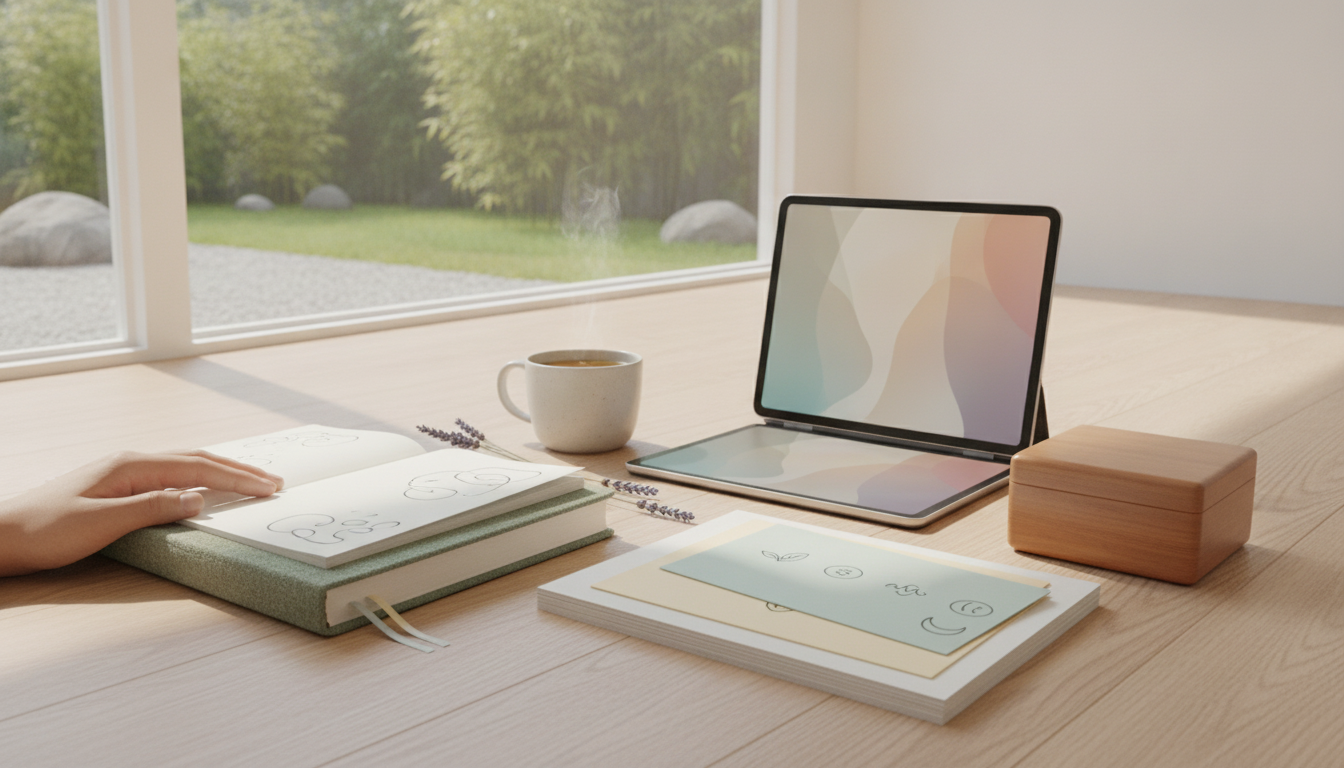
A calmer plan you can repeat when anxiety shows up
Anxiety can make everyday tasks feel heavier than they need to be—especially when you’re tired, busy, or already stressed. The most helpful calm plan is often the one that’s simple enough to repeat on rough days: a short practice to steady your body, a prompt to guide your thinking, and a routine that keeps you anchored to basics.
The Anxiety Relief Bundle: A Path to Calm is a 4-in-1 digital toolkit built around that idea—mindfulness exercises, positive-thinking prompts, a printable checklist, and a course-style outline that helps turn coping skills into habits. For background on anxiety disorders and evidence-based support, see the National Institute of Mental Health (NIMH) and the American Psychological Association (APA) stress resources.
What’s included in the 4-in-1 bundle
- Mindfulness exercises designed to calm the nervous system and refocus attention in the moment
- Positive thinking prompts that help challenge unhelpful thought patterns without forced optimism
- Printable checklist for consistent daily practice, especially when motivation dips
- Course outline structure that breaks skills into manageable steps and review points
Because each piece is short and practical, it’s easier to use consistently—whether you’re dealing with an unexpected spike in anxiety or trying to build steadier day-to-day regulation.
How the pieces work together on a hard day
When anxiety feels intense, it helps to move in a specific order: regulate the body first, then work with thoughts, then take one stabilizing action, then reflect briefly so you know what to repeat next time.
- Start with a short mindfulness exercise to reduce physical symptoms (tight chest, racing thoughts, restlessness).
- Use a positive-thinking prompt to name the worry, test it, and replace it with a more balanced thought.
- Follow the checklist to complete one small action that signals safety and stability (hydrate, step outside, tidy one surface).
- Return to the course outline to track what helped, what didn’t, and what to practice next time.
Quick-start plan (10–20 minutes)
| Step | Tool | Time | Goal |
|---|---|---|---|
| 1 | Mindfulness exercise | 3–5 min | Lower intensity and ground attention |
| 2 | Positive thinking prompt | 5–8 min | Shift from catastrophic to realistic thinking |
| 3 | Printable checklist | 2–5 min | Create momentum with one doable action |
| 4 | Course outline review | 2–5 min | Reinforce the skill and plan the next practice |
Mindfulness exercises: simple practices that fit real schedules
Short practices done more often tend to beat long sessions done once in a while. Consistency builds familiarity, and familiarity makes it easier to access skills when you actually need them.
- Go short, go steady: a few minutes daily can create noticeable momentum over time.
- Attach it to something you already do: morning coffee, a lunch break reset, or a pre-bed wind-down reduces decision fatigue.
- Match the technique to the moment: grounding for spiraling thoughts, breath pacing for physical anxiety, body scans for muscle tension.
- Keep expectations practical: the aim is steadier regulation—not eliminating every anxious thought.
If you’d like a broader wellness foundation alongside anxiety tools, Whole You: Holistic Wellness Guide can help you build supportive basics (nutrition, movement, self-care) that make coping skills easier to stick with.
Positive thinking that feels believable, not forced
Helpful reframes don’t deny reality—they reduce the sense of threat so your brain can problem-solve. The goal is “balanced and grounded,” not “perfectly positive.”
- Swap extremes for accuracy: replace “everything is fine” with a statement that acknowledges uncertainty while lowering alarm.
- Separate facts from fears: identify what you know, what you assume, and what you can verify.
- Use compassionate self-talk: talk to yourself the way you would to a friend in the same situation.
- Personalize your best reframes: track which prompts work for work stress, health worries, or social anxiety so you have ready-to-go scripts.
Printable checklist: turning coping skills into a routine
A checklist works best when it’s a menu, not a test. On low-energy days, doing a few items is still a win—because it keeps you connected to stability.
- Prioritize calm basics: hydration, balanced meals (protein/fiber), gentle movement, sunlight, and brief social connection.
- Build “micro-wins”: wash your face, open a window, two-minute tidy, or step outside for one minute.
- Reduce friction: pre-decide the easiest items so you don’t have to negotiate with your mind when you’re anxious.
- Review weekly: notice triggers, time-of-day patterns, and which actions reliably help.
For people who feel calmer with clear environmental anchors, A Guide to Safe Space Mapping can be a helpful companion—especially if your nervous system responds strongly to certain places, rooms, or sensory cues.
Course outline structure: a calmer path through repetition
Learning coping skills is one thing; using them under stress is another. A course-style outline helps by creating a progression: learn a skill, practice it, revisit it at different stress levels, and note what changes.
For an anxiety toolkit that’s structured and easy to revisit, The Anxiety Relief Bundle: A Path to Calm keeps everything in one place so you’re not hunting for the “right” exercise when you’re already overwhelmed.
Who this bundle is for
Getting started: a 7-day gentle reset
When to seek extra support
FAQ
What drink calms anxiety?
Many people find caffeine-free options most helpful, such as water for steady hydration or warm herbal tea (like chamomile or peppermint) for a soothing routine. If caffeine makes you feel jittery, reducing coffee or energy drinks can lower baseline physical anxiety; check with a clinician if you’re considering supplements or have medication interactions.










Leave a comment