DIY Homemade Cat Toys: 4 Safe Stimulating Ideas
How do you make homemade stimulating toys for cats?
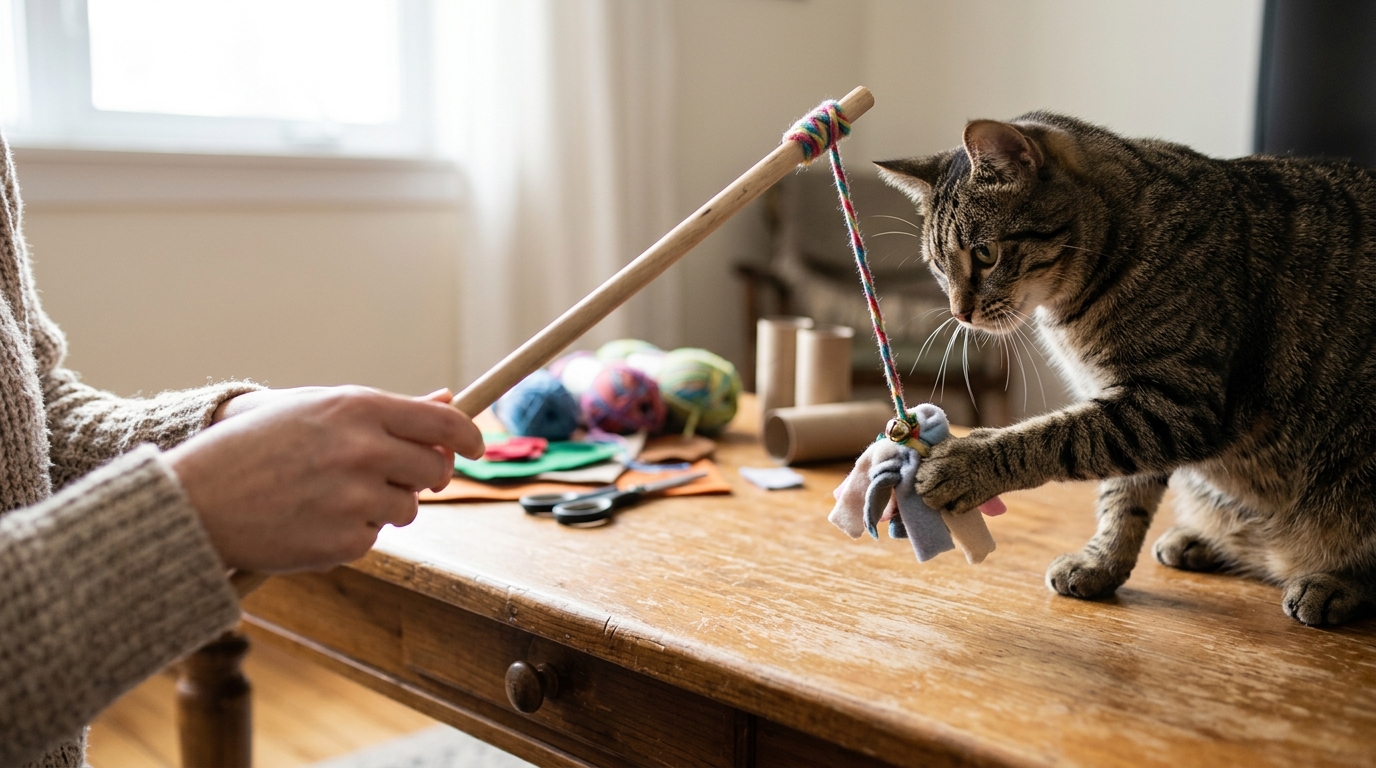
Homemade stimulating cat toys are easy to make with safe household items, and the best ones encourage stalking, batting, pouncing, and problem-solving. Start by choosing non-toxic materials and avoiding anything that can splinter, unravel into long strings, or be swallowed. Always supervise new toys until you know how your cat plays.
1) Paper “prey” crinkle ball
Crumple a sheet of plain paper or a brown paper bag into a loose ball about the size of a ping-pong ball. For extra excitement, wrap the crumpled ball in another layer so it crackles more. If your cat likes to shred paper, use heavier kraft paper and replace it when it gets soggy or torn into small pieces.
2) Sock kicker toy
Fill a clean sock with a little polyfill, old T-shirt strips, or crumpled paper, then tie a tight knot at the open end. Make it long enough for “bunny kicks.” Skip yarn, ribbon, or loose threads; trim anything that dangles.
3) Cardboard treat puzzle box
Use a small cardboard box (like a tissue or shipping box). Cut a few paw-sized holes on the sides and top, then drop in a handful of dry treats or kibble. Your cat has to reach in, paw around, and “hunt” for rewards. Start with larger holes and fewer obstacles, then make it harder by adding paper packing inside.
4) Toilet paper roll foraging toy
Fold one end of a cardboard tube inward, add a few pieces of kibble, then fold the other end closed. Poke 2–4 small holes so scent escapes. Your cat will bat it around and work to get food out.
For more ideas, safety notes, and step-by-step options, visit the full guide on homemade stimulating toys for cats.
FAQ
How can I tell if a homemade cat toy is safe?
Choose sturdy, non-toxic materials and avoid small parts, long strings, rubber bands, or anything that can break into sharp pieces. If the toy starts shedding bits or fraying, toss it and make a new one.











Leave a comment